
St John’s Wort
10th June 2026
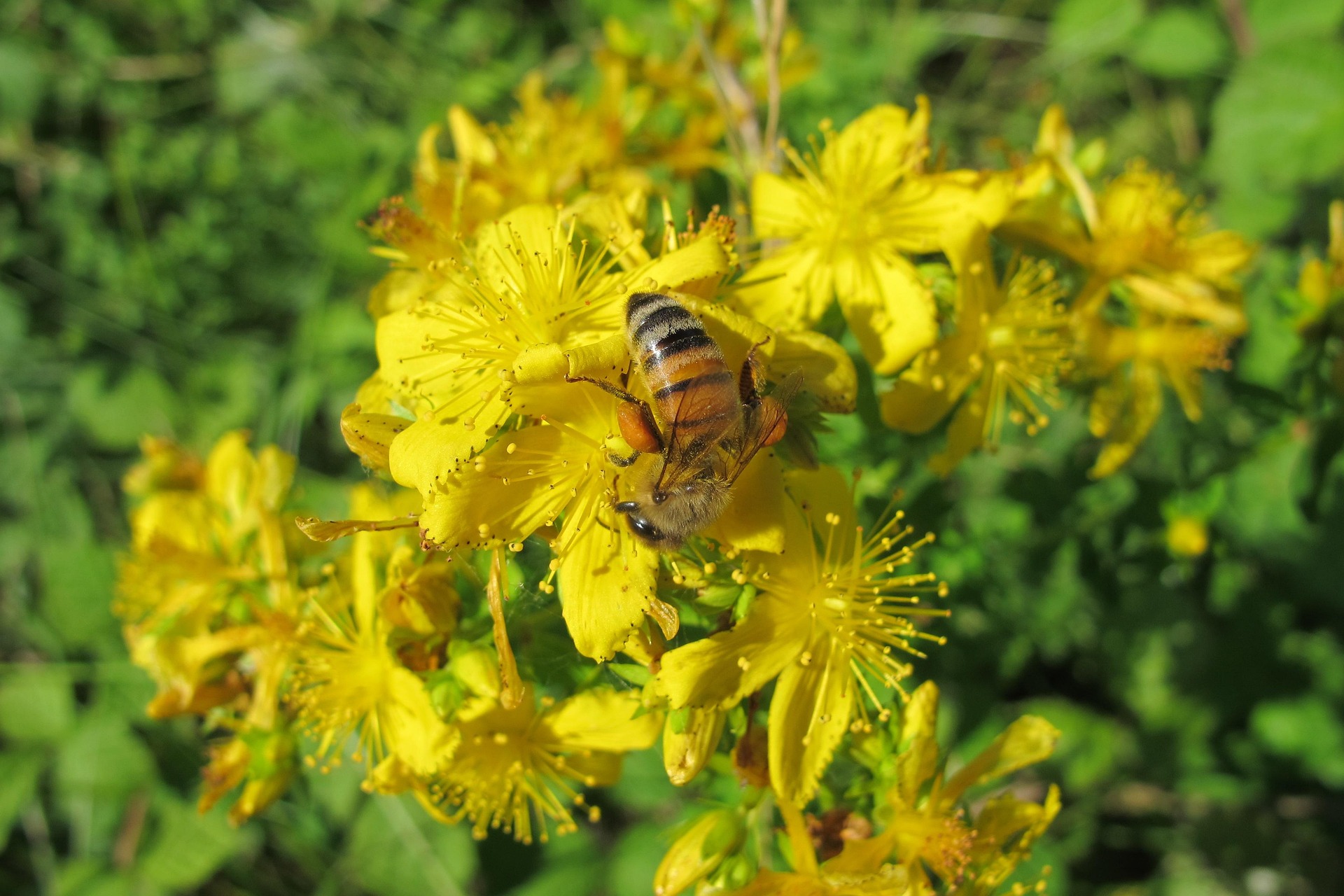
Hypericums are commonly found in gardens and municipal areas, enjoyed for their big yellow flowers. Sometimes known as the ‘happy plant’ it’s not just the joyful blooms that make you smile, there’s also a therapeutic punch in the plant that is preferred by some to off-the-shelf mood improvers.
However, for that kind of medicine, it’s the wild hypericum perforatum that’s needed. It grows plentifully on our limestone hillsides. Once it finds a happy place it will multiply with joy. It is always a delight to find on a herb walk.
Plant ID
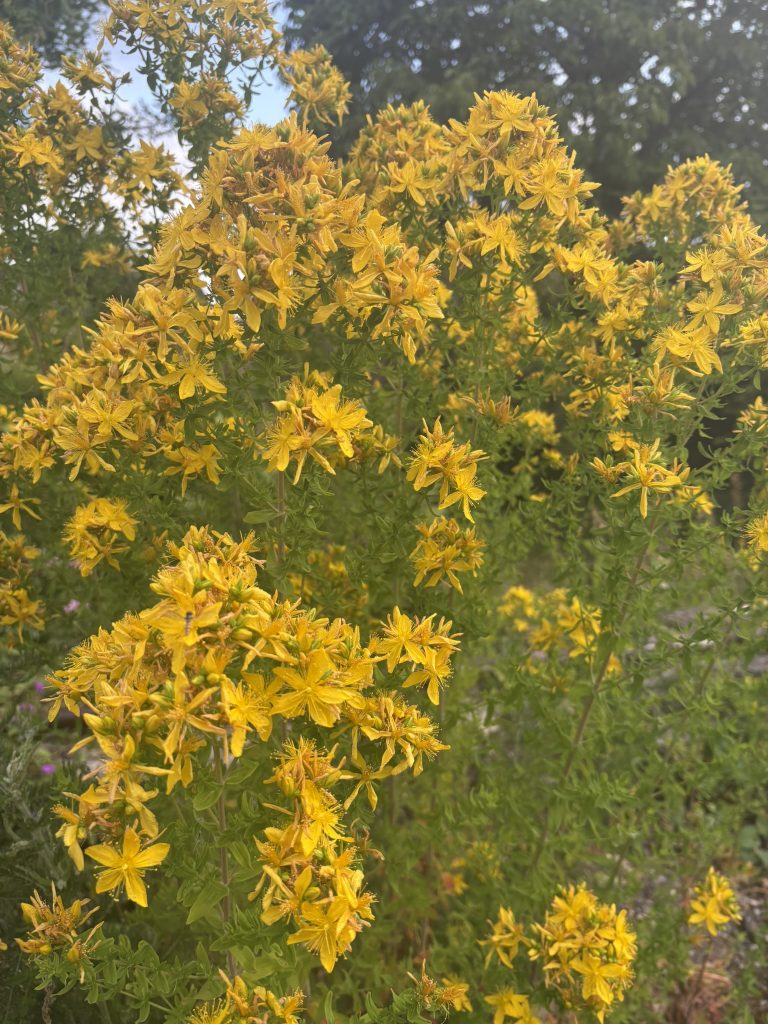
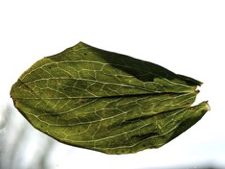
There are couple of ways to be sure you’ve found the right shiny yellow flower. First check the leaves. Part of the magic of St John’s Wort is the red-coloured oil she contains, hypericin. This is considered an anti-depressant. It’s in all parts of the plant but we look for the tell-tale signs in the leaves of oil-holding pores. Hold a leaf to the light and you can actually see these little holes. The french call this herb mille-pertuis (a thousand perforations).
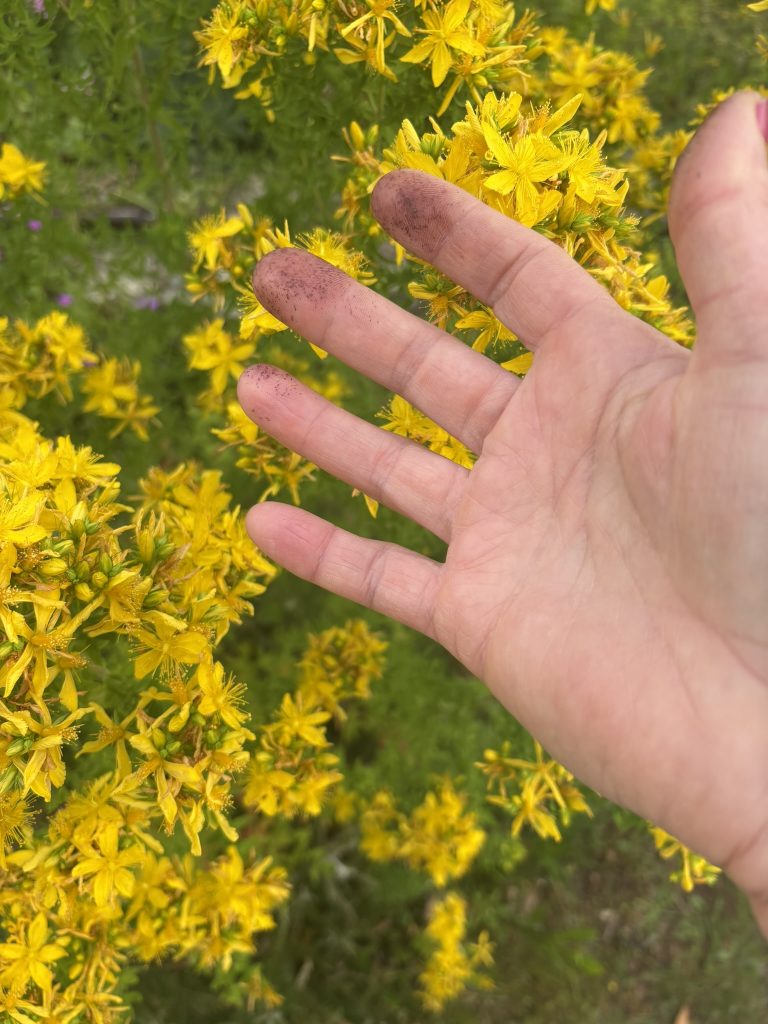
The second check is to crush a flower between your fingertips. Some of that red oil will be released creating a slight stain. You can tell someone who’s been gathering SJW by the red flecks on their fingers!
Healing oil
Gathering the flowers is a treasured folk tradition, often taking jars into the fields to make their remedies in situ.
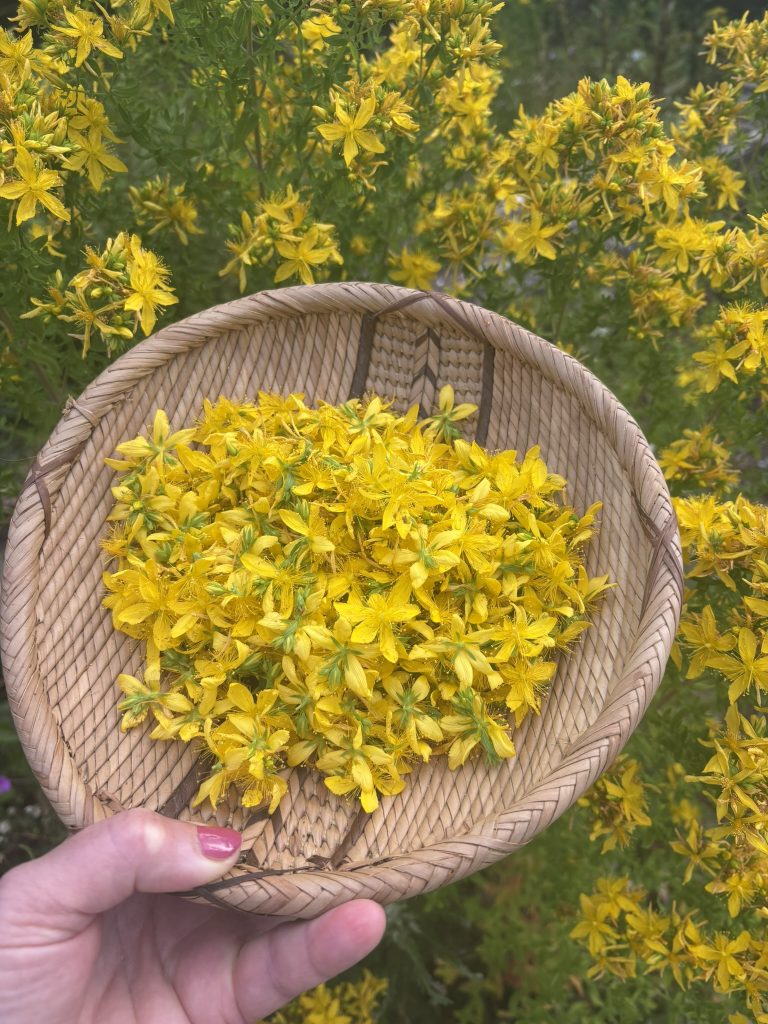
Flowers are packed in a jar and covered in oil then left to steep for about six weeks, through the height of summer (or 40 days and 40 nights for the traditional Spanish approach) – so if you’re going to try, use an oil that will endure this, like olive oil or rapeseed oil. Gradually you’ll see the contents of the jar turn a glorious red. This can then be strained off and bottled.
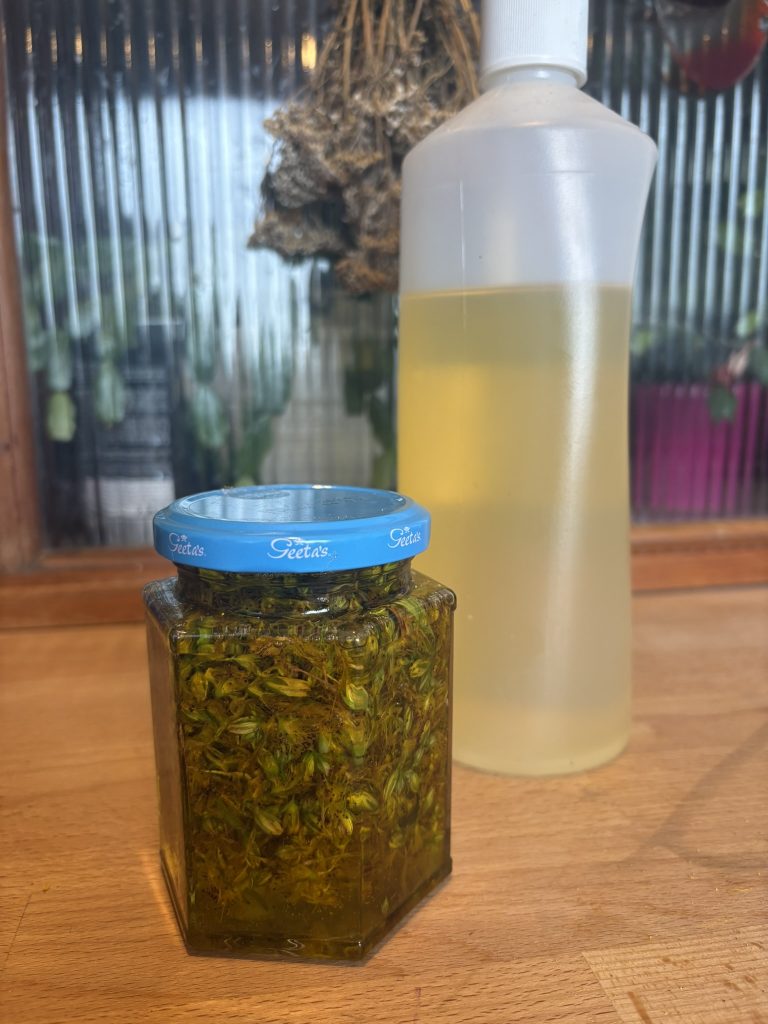
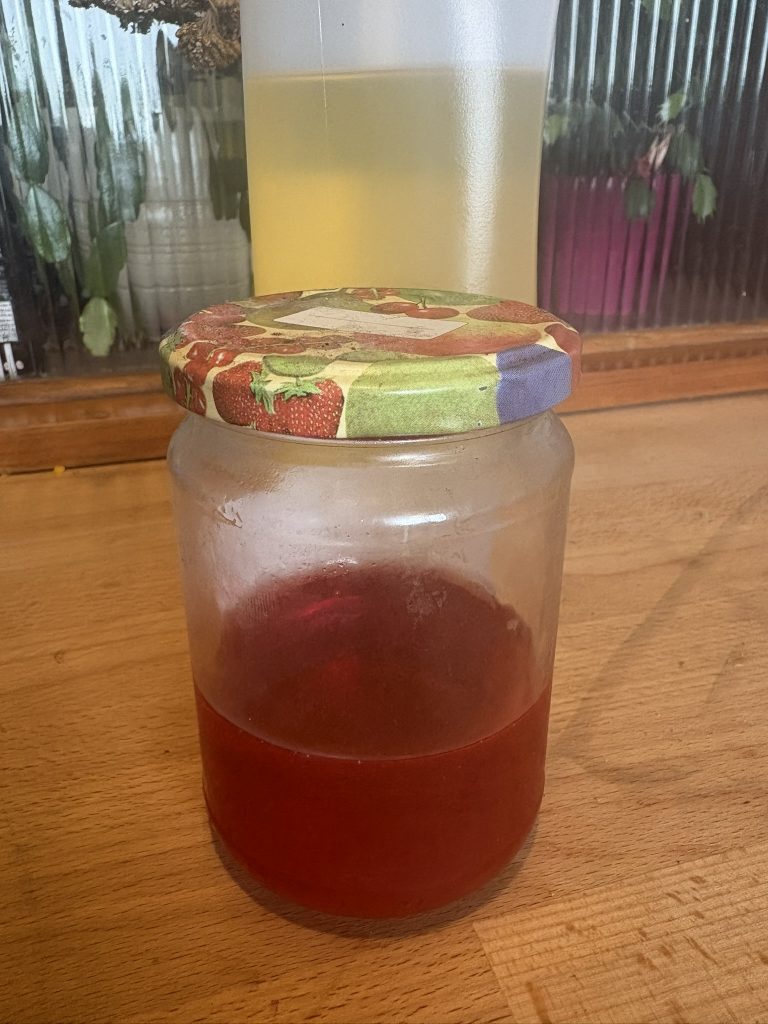
The red dye is seen as a sign of St John’s Wort oil’s healing ability. It is used against aches and pains, often as a preventative measure – such as before going on a long walk or horse ride – also as a restorative measure. It can be made into a cream or salve for joints and muscles. The red oil can be massaged over the heart to instil self-belief.
Fresh SJW can also be tinctured (macerated in alcohol) and dried SJW can be infused and drunk as a tea. It is associated with gratitude and oil and tincture are both considered two of the Great Remedies.
Why the association with St John?
The flowers are connected with St John the Baptist because they are in flower on his feast day, making it a good way to remember when to go and collect your year’s supply. St John’s Day, 24th June, was anticipated on the evening before with ritual jumping over bonfires lit to purify the air, saving people and animals from malevolent spirits. The Latin name ‘Hypericum’ is derived from a Greek word meaning ‘over an apparition’, connected with her ability to dispel evil, this could include those evil spirits associated with melancholia which was believed to be an invasion of your energy or ether.
Protective plants were dried in the fires to preserve them and embue them with the potency of the flames. These would then be worn as a defensive amulet for the rest of the year. SJW was the most important among these. Others were ivy, mugwort, yarrow, vervain, orpine, yellow iris, elder, figwort, white campion, corn marigold, dodder, plantain, hawthorn, lime flower, lavender, quaking grass and male fern.
Some will call the herb St Joan’s Wort, but as her feast day is 30th May it’s a little early for them to be in bloom.
In Ireland St John’s Wort is known as Mary’s Sweat, from the belief that it sprang from the drops of sweat she shed while in labour giving birth to Christ. I can’t think why it would have been connected with December, but then the shepherd’s offering of a newborn lamb doesn’t feel like a very December thing either – maybe the birth didn’t happen in the depths of winter?
Weather lore
Every significant day in the calendar seems to prompt us to a piece of weather lore. St John’s Eve is associated with a quip linked to Devon folklorist Sarah Hewett around 1900:
“Before St John’s Day we pray for rain,
after that we get it anyhow”