Key identifying features
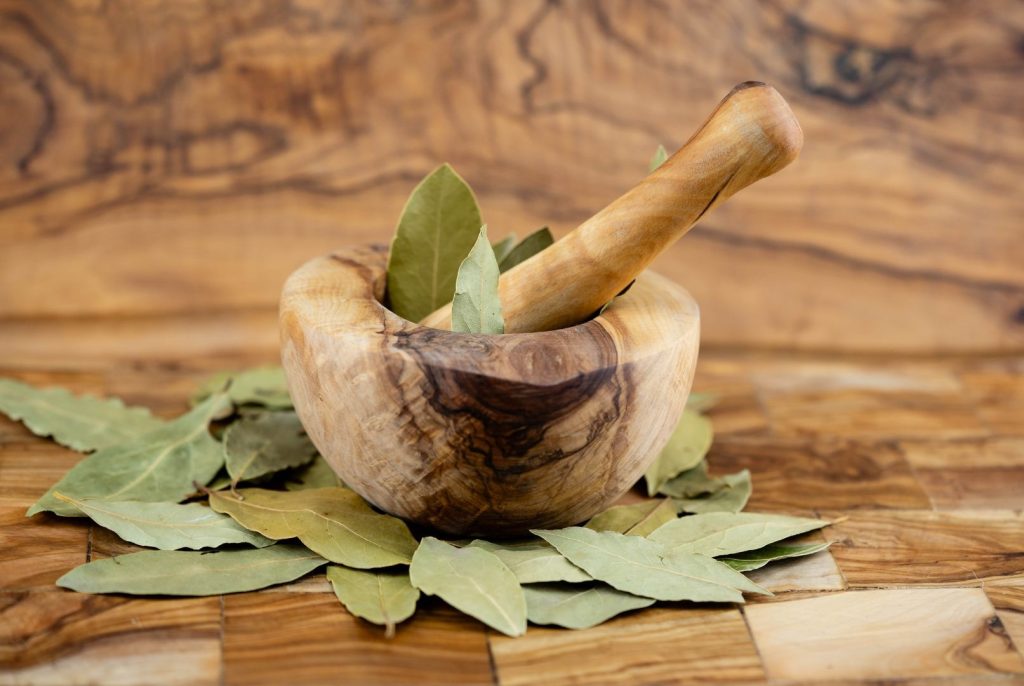
Bay is an evergreen tree or shrub, often seen as a clipped hedge, container plant, or small ornamental tree. Its leaves are tough, leathery and oval-shaped with pointed tips, dark glossy green on the upper surface and paler beneath. When rubbed or crushed, they release a warm, spicy fragrance that is unmistakable. In spring, Bay produces small yellow-white flowers tucked beneath the branches, which later develop into blackish oval fruits. The bark is smooth and ranges from dark green to brown. It is important not to confuse true Bay with Cherry Laurel (Prunus laurocerasus) or Portuguese Laurel (Prunus lusitanica), both of which are toxic and lack Bay’s spicy scent.

Virtues
Bay has been valued since antiquity for its flavour, healing qualities and symbolism. In the kitchen, its leaves are a staple seasoning herb, lending depth and warmth to soups, stews, sauces and pickles. The leaves should always be removed before serving. Medicinally, Bay has traditionally been used to ease sluggish digestion, colic and bloating. Infused oil from its leaves has been applied as a rub for sore joints and muscles, and leaves added to the bath are said to soothe aches and fatigue.
Spiritually, Bay is associated with protection, healing, and inspiration. In ancient Greece and Rome, crowns of Bay were worn by poets, victors and scholars to symbolise honour and success, a tradition echoed today in the term “baccalaureate.” In folklore and magic, Bay is used to cleanse and protect spaces, inspire creativity and focus intentions. Wishes may be written on Bay leaves and burned, or the leaves placed beneath a pillow to encourage vivid dreams.
Note: Bay should be avoided internally during pregnancy.

Growing Bay
Bay thrives in sunny to partially shaded spots with well-drained soil and is easily grown in pots, hedges or sheltered gardens. Regular pruning in winter helps to shape the plant and provides branches that can be used decoratively.
Foraging/harvesting tips
Leaves may be harvested sparingly at any time of year, though those picked in summer are the most aromatic. Foragers will often find Bay in gardens, courtyards and hedges, particularly near doorways where it is traditionally planted as a guardian tree. As Laurus nobilis is widely cultivated and not endangered, the best practice is to harvest from cultivated plants rather than from the wild. Be sure to identify it, as ornamental cultivars are often found in gardens.