
Key identifying features
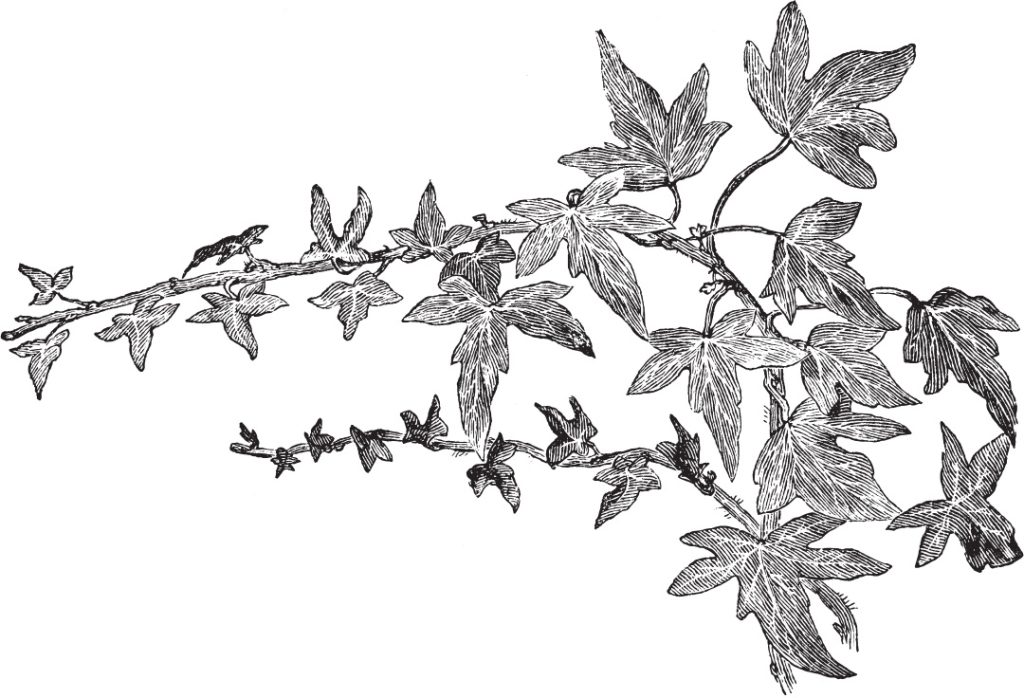
Ivy is a hardy, evergreen climber or ground-covering plant, easily recognised by its dark green or variegated, lobed leaves and its ability to cling to almost any surface. It climbs using small, root-like stem suckers that adhere to bark, stone, or brick, allowing it to reach heights of up to 30 metres. Mature plants bear clusters of yellow-green, nectar-rich flowers in late autumn, providing one of the last food sources for bees and other pollinators before winter. These flowers develop into blackish-purple berry clusters that ripen through the cold months and offer vital sustenance to birds such as thrushes, pigeons, and blackbirds.
Although sometimes misunderstood as harmful to trees, Ivy is not parasitic. It rarely causes damage to healthy trees and actually provides ecological benefits, offering nesting sites, shelter, and insulation for wildlife, while maintaining year-round greenery in both urban and rural landscapes.
Virtues
While Ivy’s berries are toxic to humans, its leaves have been used in traditional herbal medicine. Ivy contains saponins and other compounds that may help to loosen mucus and ease coughs, making it a common ingredient in modern herbal syrups for respiratory complaints. Infused in olive oil, Ivy leaf can gently stimulate local circulation and is sometimes included in topical preparations for cellulite. Poultices made from Ivy leaves have been used externally to ease corns, warts, eczema, and minor skin inflammations, though care must be taken, as the plant may irritate sensitive skin.
Beyond its medicinal value, Ivy stems have long been woven into garlands, crowns, and seasonal decorations. The plant’s evergreen nature and adaptability make it a potent symbol of endurance and connection.
Spiritually and magically, Ivy is associated with protection, fidelity, cleansing, and community. Its clinging, intertwining growth represents bonds of friendship and love. It is considered a Moon herb, carrying a silver, reflective energy, and is often used for gentle protection and concealment — “a living veil.” In European tradition, Ivy was sacred to Bacchus, the Roman god of wine and festivity. Ivy crowns were worn during feasts to protect revellers from intoxication, a symbolism that endures in modern protective and hex-breaking rituals. Ivy also features in Yuletide and wedding decorations as a sign of lasting affection and harmony.

Growing and/or foraging/harvesting tips
Ivy grows abundantly year-round on walls, trees, rocks, and as ornamental ground cover. It thrives in shade or sun and is well adapted to both wild and urban settings. When harvesting, prune gently and selectively, focusing on new or unattached growth rather than established stems to avoid damaging the host structure or habitat.
Harvest leaves for external preparations at any time of year, though mature leaves are richest in active compounds. Handle with gloves to avoid skin irritation. Ivy is not related to Poison Ivy (Toxicodendron radicans), which belongs to a completely different plant family.
Ivy is widespread, resilient, and not endangered. Its presence in the landscape supports biodiversity throughout the colder months, making it an important ally for both herbalists and wildlife.