
Key identifying features
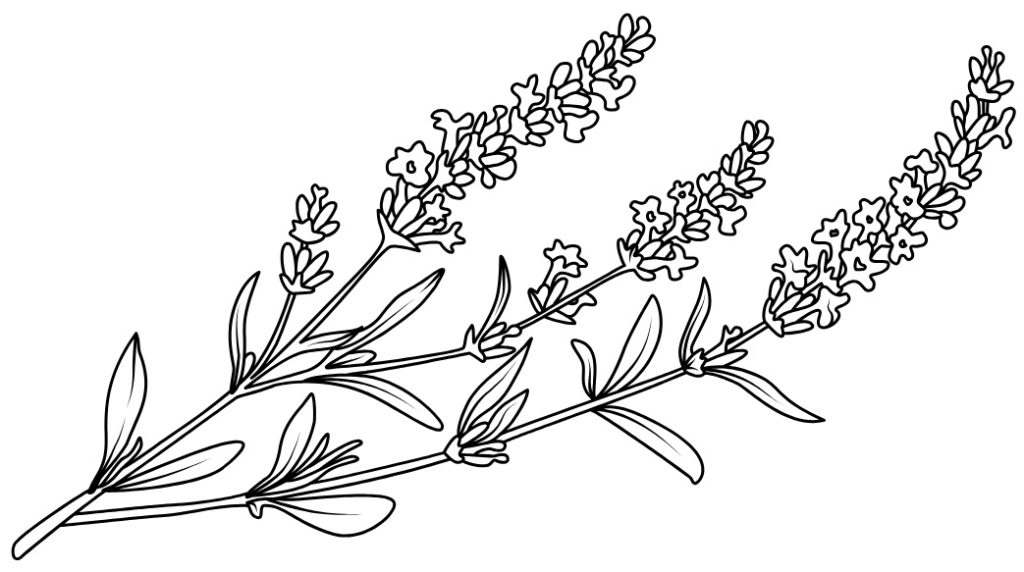
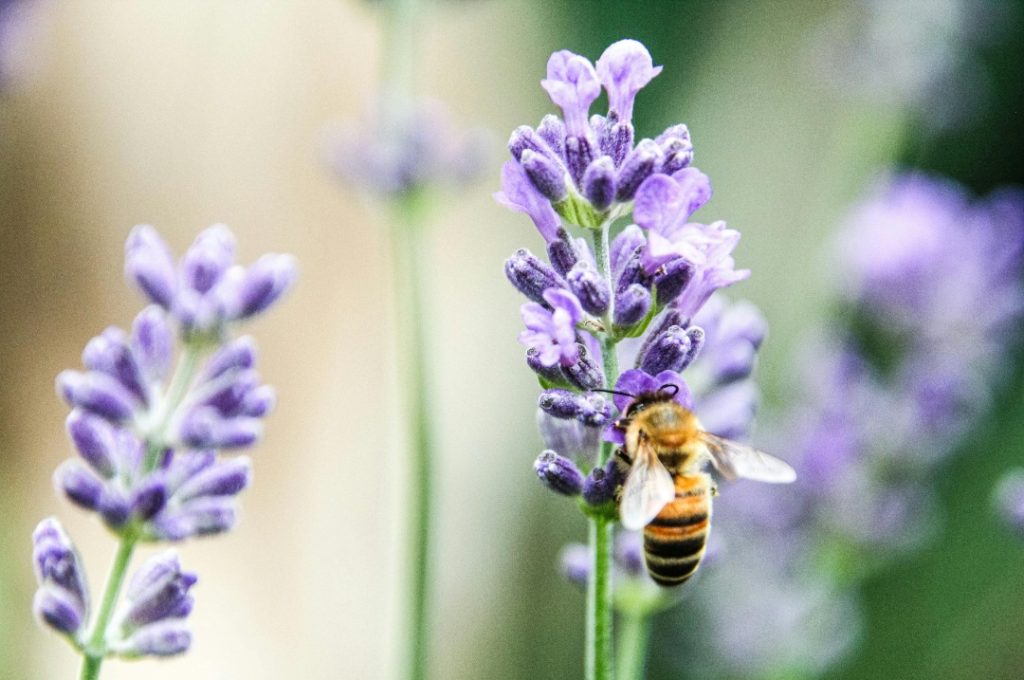
Lavender is a small, evergreen shrub that typically grows between 30 and 90 centimetres tall. It forms neat mounds of narrow, grey-green leaves covered in fine hairs. During summer, upright flower spikes emerge bearing numerous small purple, violet, pink, or occasionally white flowers. The flowers are highly fragrant and rich in nectar, attracting bees, butterflies, and other pollinators. The distinctive floral scent is one of Lavender’s most recognisable features.
Virtues
Lavender is one of the best-loved herbs for relaxation and wellbeing. Its flowers contain aromatic oils that have traditionally been used to calm nervous tension, ease headaches, support restful sleep, and promote emotional balance. Lavender tea, pillow sachets, and essential oils are all commonly used to encourage relaxation and reduce stress.
The herb also possesses antiseptic and soothing properties. Infused oils, balms, and washes have long been applied to minor cuts, burns, insect bites, and irritated skin. In the home, Lavender is valued for scenting linens, cupboards, and living spaces, while helping to deter moths and other insects.rs.
Culinarily, Lavender flowers can be used sparingly to flavour biscuits, cakes, syrups, teas, and preserves. Their floral flavour pairs particularly well with honey, lemon, and berries.
Spiritually and magically, Lavender is associated with peace, purification, love, and happiness. It has traditionally been burned or scattered to cleanse spaces, carried for protection, and included in charms to attract harmony and affection. Lavender is also widely used in dream pillows, meditation practices, and rituals intended to promote calm and clarity.
Growing and/or foraging/harvesting tips
Lavender thrives in full sun and well-drained soil. It dislikes waterlogged conditions and performs best in relatively poor, dry ground. Once established, it is drought-tolerant and requires little maintenance beyond light pruning after flowering to maintain a compact shape.
Harvest flower spikes as the first flowers begin to open, typically from late spring through summer, depending on the variety. The stems can be dried and used in sachets, wreaths, potpourri, teas, and herbal preparations. Lavender is widely cultivated throughout the UK and is not considered threatened.