
Key identifying features
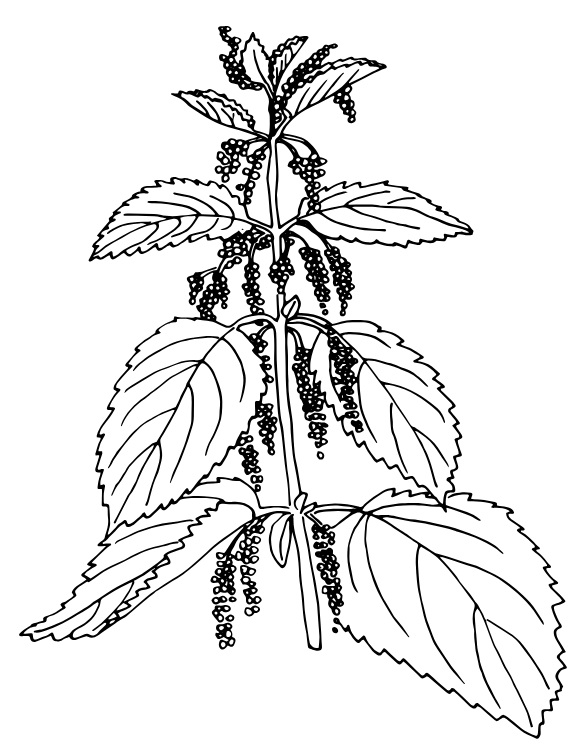
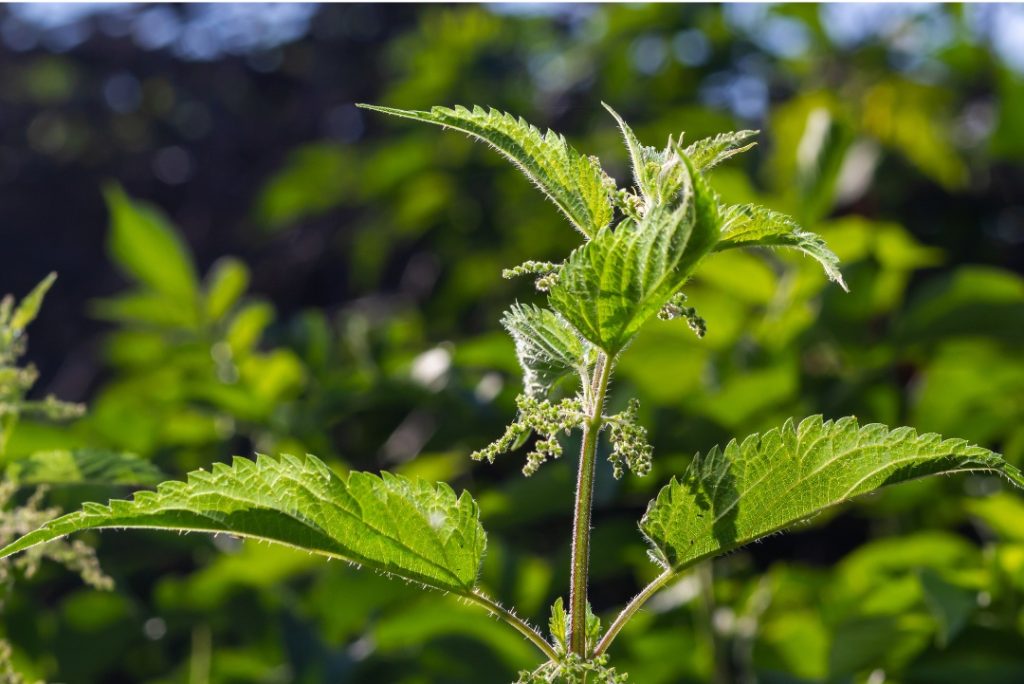
Nettle is a hardy herbaceous perennial that grows from 50 centimetres to over 1.5 metres tall. Its stems are square and covered with fine stinging hairs, as are the dark green, toothed leaves, which occur in opposite pairs. Tiny green flowers appear in dangling clusters from late spring through autumn. Nettle spreads vigorously through underground rhizomes, often forming dense patches in hedgerows, woodland edges, gardens, and disturbed ground.
The stinging hairs inject irritating compounds when touched, producing the familiar temporary burning sensation for which the plant is known.
Virtues
Nettle is one of Europe’s most nutritious and versatile wild herbs. Rich in minerals including iron, calcium, magnesium, and silica, it has long been valued as a strengthening tonic. Young leaves can be cooked and eaten like spinach, made into soups, pestos, and teas, or dried for winter use. Cooking or drying removes the sting.
Medicinally, Nettle is used to support healthy circulation, nourish the body during convalescence, and ease seasonal allergies. It is also valued as a gentle diuretic and has traditionally been used to support joint health and reduce symptoms of rheumatism. Nettle seed is increasingly used by herbalists as a restorative tonic, while the roots are employed in preparations supporting prostate health.
Beyond its medicinal and culinary uses, Nettle is an important utility plant. Its fibres have been used to make cordage, cloth, and fishing nets, while the leaves produce nutrient-rich compost activators and liquid fertilisers. Nettle patches also provide essential habitat and food for many butterflies and other insects.
Spiritually and magically, Nettle is associated with protection, resilience, courage, and vitality. It has been carried as a protective herb, hung in homes to ward off negativity, and used in purification rituals. Its sting has long symbolised strength, boundaries, and the ability to defend oneself when necessary.
Growing and/or foraging/harvesting tips
Nettle grows abundantly throughout the United Kingdom in hedgerows, woodland margins, gardens, waste ground, and along riversides. It prefers fertile, nitrogen-rich soils and can quickly colonise an area once established.
Harvest young leaves and tops in spring and early summer, before flowering, for the best culinary and medicinal quality. Gloves are recommended. Older leaves can become coarse and are generally better suited for compost or fertiliser preparations. Seeds are harvested in late summer, while roots are typically dug in autumn. Nettle is widespread and not threatened. Harvesting moderate amounts from healthy stands is generally sustainable.