
Key identifying features
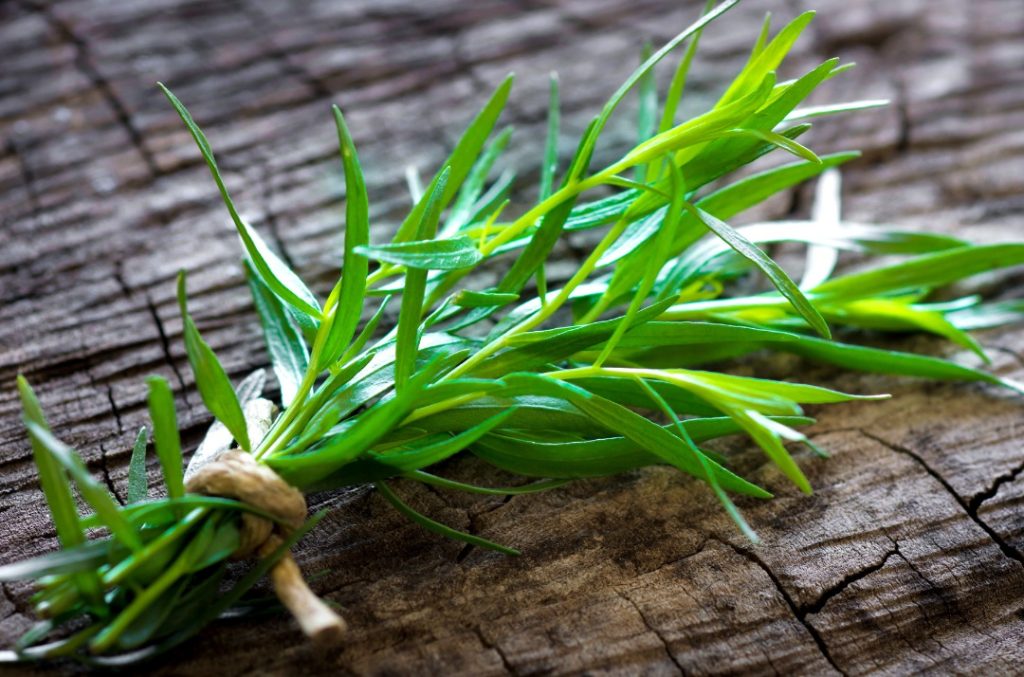
Tarragon is a hardy, aromatic perennial herb reaching 60 to 120 centimetres in height. It has slender, branching stems with smooth, narrow, lance-shaped leaves that release a distinctive sweet, anise-like scent when crushed. In late summer, it produces small, pale greenish-yellow flower heads that are often sterile in cultivated forms.
There are two main types: French Tarragon (A. dracunculus var. sativa), prized for its rich flavour but rarely setting seed, and Russian Tarragon (A. dracunculoides), a hardier relative with a coarser, more bitter taste. Tarragon’s fine, glossy leaves and elegant form make it both an attractive garden herb and a culinary essential.

Virtues
Tarragon is celebrated for its culinary excellence and its subtle, stimulating medicinal properties. The fresh leaves are widely used in French and Mediterranean cooking to flavour sauces, vinegars, mustards, chicken, fish, and egg dishes. It is a key ingredient in the classic fines herbes blend and lends a warm, bittersweet taste reminiscent of anise and basil.
Medicinally, Tarragon has been used as a gentle digestive tonic, helping to ease poor appetite, flatulence, and sluggish digestion. Its mild antispasmodic qualities make it soothing for the stomach and useful after heavy meals. Tarragon also contains compounds such as estragole and eugenol, which contribute to its distinctive aroma and may help reduce pain and inflammation.
Historically, Tarragon was valued as a breath freshener, a remedy for toothache (the fresh leaves were chewed to numb discomfort), and a tonic for fatigue. Some traditional herbalists have used it to support menstrual balance and relieve cramps.
Spiritually, Tarragon is associated with courage, protection, and transformation. Its botanical name, dracunculus, means “little dragon,” reflecting its winding roots and its folklore connection with serpents and strength. Tarragon has been used in protective charms and rituals to awaken vitality, dispel fear, and inspire personal renewal — a fitting reflection of its bright, invigorating scent and taste.
Growing and/or foraging/harvesting tips
Tarragon prefers well-drained soil and full sun, thriving in warm, sheltered spots. French Tarragon should be propagated by root division or cuttings in spring, as it seldom produces viable seed. Russian Tarragon can be grown from seed but has a milder flavour.
Harvest leaves in late spring through summer, just before flowering, when their essential oils are at their peak. Use fresh whenever possible, as the flavour fades when dried. Tarragon is hardy but dislikes overly wet conditions in winter; growing it in pots or raised beds helps prolong its life.
This herb is not endangered and grows readily in gardens, adding grace to herb borders and subtle fragrance to the air when brushed.