
Key identifying features
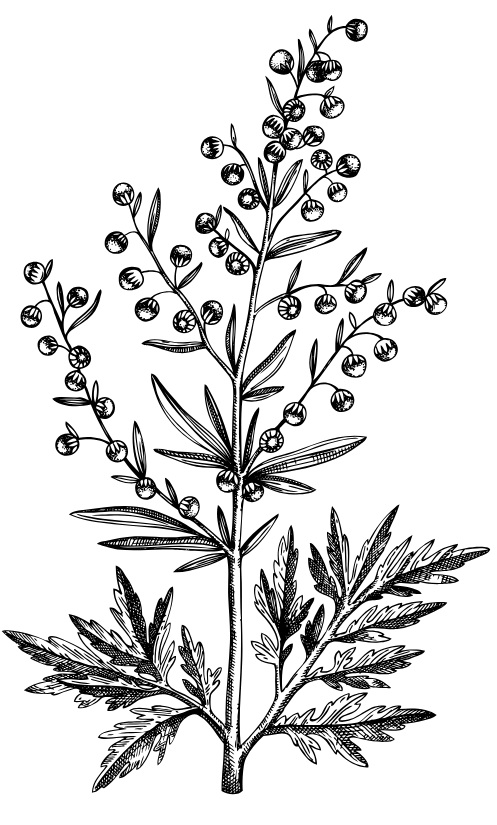
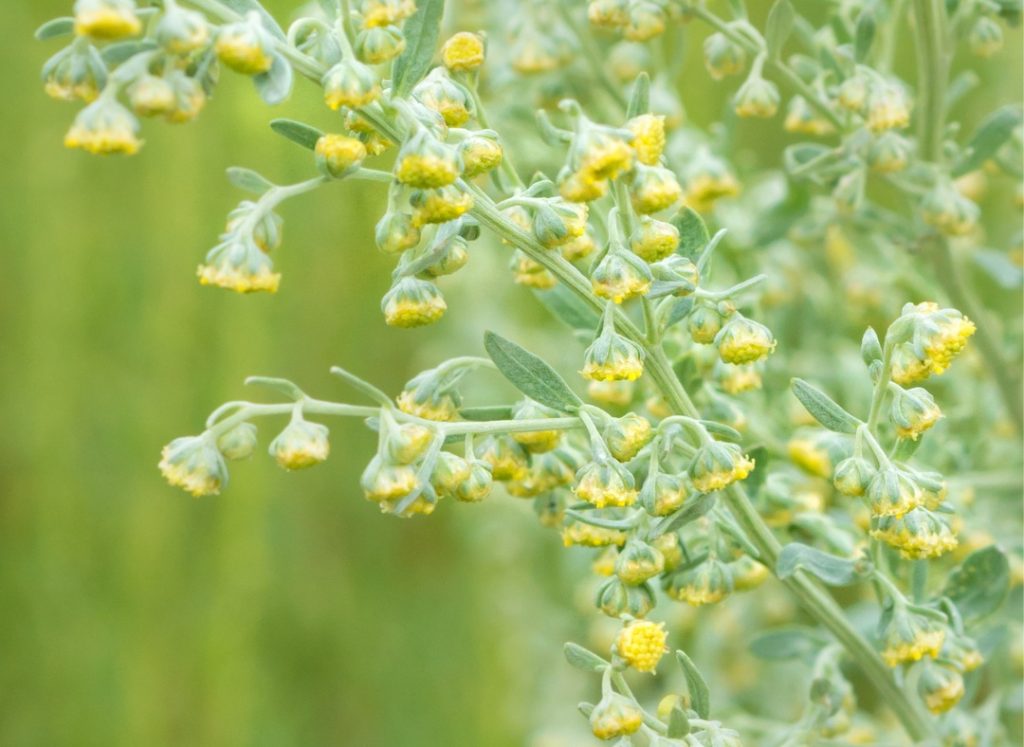
Wormwood is a hardy, aromatic perennial growing between 60 centimetres and 1.5 metres tall. Its deeply divided leaves are covered in silky silver-grey hairs, giving the entire plant a distinctive pale appearance. The stems are upright and woody at the base, bearing clusters of small, rounded yellow flowers from midsummer into autumn. When touched, the foliage releases a strong, bitter, resinous scent. The plant forms attractive soft mounds and is easily recognised by its silver foliage and intensely bitter taste.
Virtues
Wormwood is one of the most bitter herbs in Western herbalism. Traditionally, it has been used to stimulate appetite, support digestion, and encourage the production of digestive secretions. It was valued for easing indigestion, bloating, and sluggish digestion, and was often included in bitter tonics taken before meals.
Historically, Wormwood was also used to expel intestinal worms, giving rise to its common name. The herb became famous as a flavouring ingredient, in absinthe and other herbal liqueurs, although modern use is typically limited to small quantities because it is so potent.
Spiritually and magically, Wormwood is associated with protection, psychic awareness, and communication with the unseen world. It has long been burned as incense or carried in protective charms. In European folklore it was used to ward off unwanted influences, and was sometimes hung in homes or woven into midsummer garlands. Its strong scent was also believed to repel both insects and negative energies.
Growing and/or foraging/harvesting tips
Wormwood thrives in full sun and well-drained soil, tolerating poor and dry conditions with ease. It is often found in herb gardens, old cottage gardens, waste ground, and disturbed soils. The silvery foliage makes it an attractive ornamental plant as well as a useful herb.
Harvest leaves and flowering tops in summer, shortly before or during flowering, when aromatic compounds are strongest. The herb dries readily and retains much of its fragrance. Wormwood is not considered endangered and is widely cultivated throughout Britain and Europe.