
Traditional Treats
24th November 2024
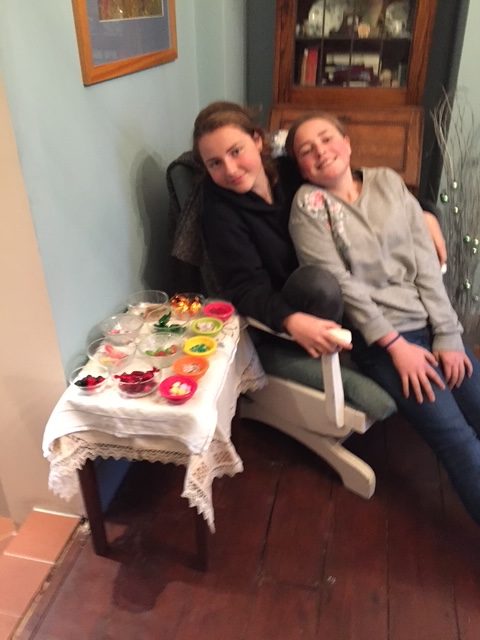
We’ve a little tradition in our family of making a display on Christmas Eve of 13 different types of sweets, arranged on a table with three cloths. It was a tactic I deployed when my children were young to occupy them in the pre-Christmas excitement and has become something they look forward to doing every year. It is actually a French tradition, I believe, with the sweets representing Jesus and the twelve apostles while the three cloths relate to the holy trinity.

Plan ahead
When time allows, we’ll make some of the sweet treats ourselves. One that’s become a favourite, made every year, is chocolate-dipped candied orange peel. It makes a great gift for friends and family too. However it does need to be prepared well ahead of time; crystallising just can’t be hurried. Over the years I’ve highlighted in my recipe the number of days each stage takes so I can plan accordingly. Though the modern instructions I follow can seem quite a faff, I was amused to stumble upon an even more convoluted process from more than five hundred years ago.Nostradamus
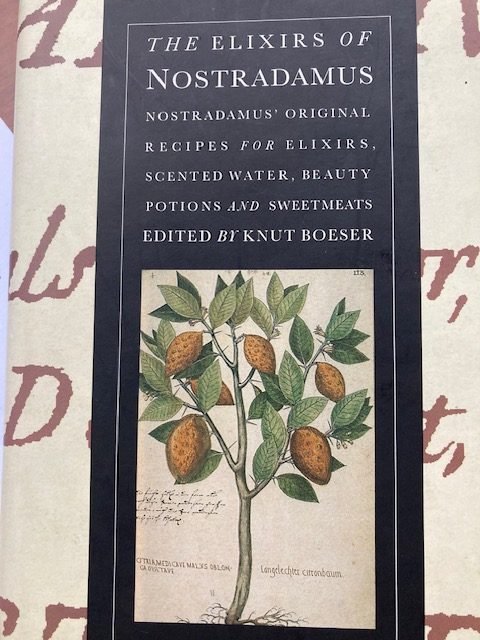
The 15th Century version was documented by Michael de Nostredame, better known as Nostradamus (1503 – 1566). He’s become renowned for his prophecies but was also one of the most important doctors and healers of his time, particularly gaining a reputation for treating plague victims and also a favourite astrologer of the French royal family (invited by Queen Catherine de Medici) and an initiated alchemist and travelling apothecary. In a series of books and writings, Nostradamus set down many instructions for making medical preparations, cosmetics, elixirs of youths as well as jams, jellies and preserves. These are also contained within the yearly almanacs that he published, which gained him the reputation for prophecy. So for your delight and amusement, and possibly as useful instruction, here are both versions of a recipe for making crystalised peel – the modern and the medieval.
Chocolate dipped candied orange peel
6 oranges 1 kg sugar 150g plain chocolateDay One
Quarter the oranges and remove the flesh and pith *see note below Put the peel into a large pan with 1.6 litres of water and bring to the boil, then simmer for an hour until the peel is tender (not floppy) Lift out the peel using a slotted spoon and put it into a bowl. Measure 600ml of the liquid and put it into the pan with 600g of sugar (if there’s not enough liquid, make up the difference with water). Dissolve gently, then bring to the boil for one minute, then pour over the peel and leave for 24 hours.Day Two
Strain the syrup from the peel into a pan, and add the remaining sugar. Dissolve gently then bring to the boil for one minute. Pour over the peel and leave for another 24 hours.Day Three
Pour the peel and syrup into a pan and bring to the boil. Reduce the heat and simmer for about an hour, or until the peel is slightly translucent. Transfer both syrup and peel to a clean bowl, cover and leave for four days.Day Seven
Drain the peel and discard the syrup **or see notes below on ideas for using the orangey sugar syrup. Arrange the peel on a wire rack set over a tray or dish and leave to stand in a cool, airy place for one week until the peel no longer feels tacky. This year I’ve experimented with the dehydrator and found a few hours at a low temperature worked fine.Day Fourteen
Slice the dry peel into finger width strips. Melt the chocolate in a bain marie (or heatproof bowl over a saucepan of water). Dip the peel strips either half or fully into the chocolate (your preference) and set back on the wire rack to cool. Pack between sheets of waxed paper and store in an airtight container. Makes about 550g.Minimum waste notes:
*Keep the flesh in the fridge and you’ll be able to enjoy a pre-peeled vitamin C boost for the next couple of days. *If you’re making jam or marmalade, remember the pith of an orange contains most of its pectin. Put this in a muslin bag and add to the boiling liquid to help improve the set. **There are lots of uses you can put the orangey sugary syrup to. Enjoy it on your porridge, sweeten a hot chocolate drink, or it can be the sugar syrup in a cocktail or fruit salad.