
Poyntzfield Herb Nursery Celebrates 50 Years
2nd April 2026
Words by Duncan Ross
Poyntzfield Herb Nursery started in a quite humble way in 1976 with just 70 species of herb plants and seeds for sale. I arrived from near Edinburgh after being an apprentice on a biodynamic market garden. This coincided with one of the hottest summers of the late 20th century, and led by steady increase to the now 400 species or so that we grow from all over the world. Due to its geographical position just north of Inverness on the Black Isle, mail order was the most popular way to trade, but many gardeners also call in to the nursery. We specialise in unusual and rare herbs not grown elsewhere.
In those days there was a more relaxed, less formal way of maintaining contact and customers tended to become friends, bringing their children and eventually their grandchildren with them to enjoy the garden and support us. There was a symbiotic relationship, and we welcomed them as we do now. It is always good to talk to keen gardeners, hear about their experiences and make recommendations for any suitable herbs for a particular health issue, along with their environmental preferences. Some sought rest and revitalisation in the herb garden and one of the best comments we ever received was, “I feel so much better after having a wander around in the therapeutic atmosphere.” This continues today, with some saying that there is a healing ambience in the warm sheltered walled garden.
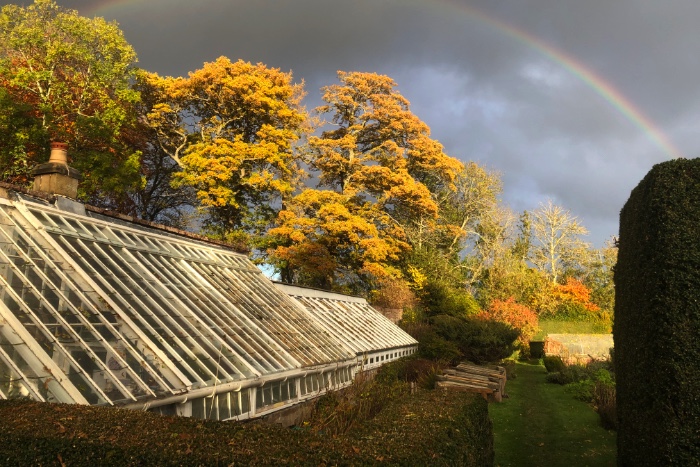
There were no herbalists north of Edinburgh in those days, apart from one in Wick. Nowadays there are many. Some herbalists make their own medicines from their gardens and we welcome that, while others like to have a display garden by their practices so that customers can identify and connect with the remedy, which is of course important. Traditional healers and seers did exist but were in decline, so we decided to not only help revive that tradition, but also create a collection of herbs that are native to the Highlands and Islands of Scotland, especially medicinals which were not known about. The Black Isle also has its “Cloutie healing wells” and a fair amount of native herbs in its wilder areas.
We soon found that not all herbal species were in circulation in the horticultural world, so we set off on botanical tours to collect seeds (with permission). These were, for example, to the Himalayas, which were successful tours because we engaged with the local community and helped as volunteers. We volunteered to teach orphans English at a special school and wrote articles about them. We were then “taken into” their community to learn about local herbs. We had a good relationship and seed exchange with the Chelsea Physic garden in London from the start, and many more botanical gardens in Europe, North America and Japan.
There was free trade with very few restrictions, and the recent loss of the single market with Brexit was a major blow (hopefully to be soon reversed). Nowadays wherever we go we collect selected seeds and information on traditional medicine in all its forms, often with the help of a local shaman and translator. We then write articles for The Herb Society magazine – Herbs, the latest being about some Andean alpine herbs that are not yet widely known for their beneficial properties.
I taught on the Herbology course for a decade or so at the Royal Botanic Garden in Edinburgh. We attract media in all its forms – TV, radio and paper/magazine. The website gives a drone view with some traditional music which we are involved in locally. Climate change has made cultivation quite a lot easier (but not always) and half hardy plants 50 years ago can usually be hardy these days.
Our vocation has led to a series of publications with nine booklets and one more recent book The Passionate Growers Guide to Herb Gardening, which was written to record information and experiences gained over almost a lifetime, so that it all could be passed on to the next generation. The second updated edition was printed recently. My son Finlay now manages the herb nursery, and we grow Arnica montana (mountain arnica) and Hydrastis canadensis (goldenseal) on a larger scale. We are part of the Scottish open garden scheme, which supports various charities.
Now we are celebrating the 50th anniversary by holding a series of events, tours and guest speakers. They run from May to September. We look forward to meeting you, the best way would be by joining on one of the guided tours. For more information contact info@poyntzfieldherbs.co.uk