

Archaeology and herbs
20th July 2026
Meadow Sweet
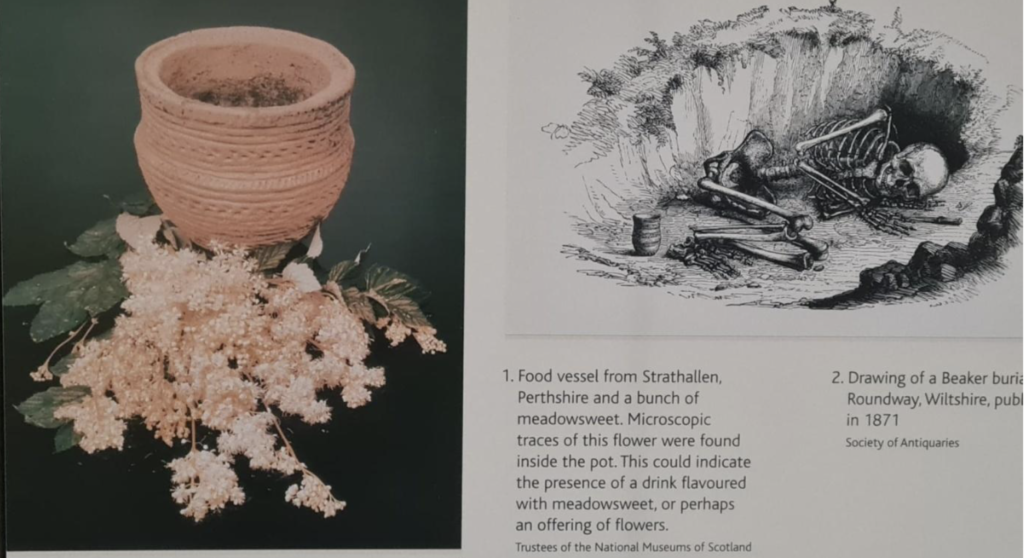
This image and interpretation is from the British Museum, it tells us that traces of meadowsweet were found inside a pot inside this burial. The interpretation tells us that this could have been used to flavour a drink like Mead (which we know Meadowsweet was indeed used for) or it could have been used as a ritual offering of flowers.
There is however no mention of medicinal properties of meadowsweet. The medicinal properties that the healers caring for this person may have known are, for example, its use for sore muscles, aches, strains, pain. If so, the fact that it is found within the vessel raises another interpretation that is not mentioned in the display.
Aspirin plus
Modern aspirin was first developed from meadowsweet when it was found to contain salicylic acid and scientists discovered its benefits and how to isolate this component. The whole plant, however contains many other compounds which may explain why it works differently than the isolated component in aspirin, in fact it has numerous properties which help digestive health.
Historical context
Archaeological excavations suggest that a large proportion of the population in the early period likely suffered with stomach parasites. The Anglo-Saxon diet consisted of pig, mutton and cow, and their cooking pots were not glazed, so they would retain and absorb the flavour of various foods or remedies. These thin, fragile porous pots could not withstand high temperatures either, so they were unable to heat food to high temperatures which may have resulted in contamination and the build-up of bacteria.
Excavations at York have found eggs of whipworm and roundworm, pointing towards stomach worms and stomach disorders being chronic. Therefore any herb which would help the digestive system would be a prized remedy.
Seeing Further benefits
Meadowsweet can also be used as an eye wash to help relieve sore itchy eyes.
One thing that is seen frequently in the medical remains or books of Roman and early medieval Britain is a large amount remedies focused on irritated and inflamed eyes.
Plant Associations
It is interesting that the plant was found in a grave as it also has a strong association with death in folklore, with the scent of flowers said to be able to induce a fatal sleep. Could this have been a means for the person to die?
Perhaps the person was a healer themselves and used meadowsweet as a way to help their community, therefore they were buried with it in their cup as a symbol of their role and status.
Perhaps the person used meadowsweet a great deal during their life as they suffered from digestive distress and they were buried with it so that the herb could help them in their next life.
Perhaps the cup included other herbs that left no traces.
These are all things that we will never know. They are speculations, other ways to view the pot with herbs.
Missing information
What is interesting to me is the fact that with all this wealth of knowledge around the healing power of meadowsweet, that it wasn’t mentioned as a potential medicine in the text.
Archaeological finds of plants are vitally important to our understanding of life in the past. We find remnants of herbs in kitchens, food containers, in gardens and in cesspits. These are often either described as food, or as weeds which happen to be growing there and disregarded.
We need to look at, and acknowledge, the fact that these plants have food but also medicinal benefits. And this tells us that the area around the settlement or the garden could have used as a pharmacy and that women, who tended to do the gathering and cooking, were most likely the users of these plants, and therefore the keepers of this herbal knowledge. This then gives us a window into the life of the people living there, into the medicinal methods of the people at the time, into the potential illnesses they may have suffered based on the plants they used and had around them.
It also gives us otherwise unavailable evidence of possible women healers whose activities are often largely invisiblein the archaeological record.
About Rox
Rox is a historical and community herbalist and an ambassador for The Herb Society. Her work sits at the intersection of historical herbalism, women’s healing traditions, embodied restoration, community care, decolonial perspectives on plant medicine, and the role of plants in memory, belonging, and restoration after rupture.
Through Living History with the Historical Herbalists, Rox explores the practical use of medicinal plants in the past and the lives of the people who used them. She also leads foraging walks, women’s seasonal circles, and her online learning community, Wise Herbal Ways.
Rox is also the host of The Sage’s Cabin podcast: conversations with herbalists, historians, and voices within social justice movements, to weave together stories of healing, resistance, and reconnection.
She is available for talks, workshops, Living History events, podcasts, and collaborations.